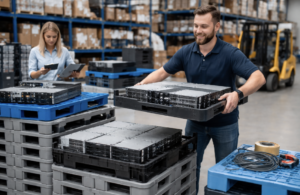
In the world of IT, physical infrastructure still matters. Even in an industry built on software, cloud platforms, cybersecurity, AI, and digital transformation, companies still depend on servers, networking gear, desktops, laptops, peripherals, replacement parts, and other hardware that must be stored, moved, shipped, and protected. The broader Information technology sector continues to expand in ways that make logistics more important, not less, especially as enterprise demand grows around data centers, cloud infrastructure, and AI-related equipment.
That is exactly why better material-handling decisions deserve more attention on IT-focused websites and inside IT-focused businesses. When a company is trying to improve warehouse flow, protect expensive equipment, reduce shipping headaches, and create a more organized operation, pallet choice becomes more strategic than many teams first realize. A well-designed plastic pallet solution does more than move products from one place to another. It can support cleaner storage practices, more predictable shipping workflows, and stronger operational consistency from the warehouse floor to the receiving dock. For businesses looking at long-term handling solutions, Custom Pallets can play a meaningful role in that bigger operational picture.
Why Physical Infrastructure Still Matters for IT Companies
The modern IT landscape is moving fast, but that speed is tied to real-world hardware. Recent reporting on Microsoft’s Singapore infrastructure expansion, Meta’s Texas AI data-center investment, and Dell’s AI server growth outlook all point to the same reality: IT companies are handling more infrastructure, more systems, and more high-value equipment than ever before. That creates pressure not only on procurement and deployment, but also on storage, transportation, receiving, staging, and asset protection.
For many IT businesses, storage inefficiency quietly eats into productivity. Equipment gets stacked in ways that make access slower. Parts end up stored in mixed areas without clear handling standards. Shipping teams work around inconsistent pallet sizes or damaged wood bases. Receiving teams waste time rechecking items that were not staged well in the first place. These are not minor inconveniences. They affect labor time, equipment condition, inventory flow, and the overall professionalism of the operation. In a sector where precision matters, the physical side of the workflow should reflect the same standard as the digital side.
How Plastic Pallets Improve Storage and Equipment Handling
Plastic pallets bring a level of consistency that many IT environments appreciate. Unlike traditional wood options that can vary in weight, condition, and surface quality, plastic pallets are typically valued for repeatability. That consistency matters when a company is storing delicate components, palletizing boxed electronics, moving racks of equipment, or trying to create a cleaner and more predictable warehouse environment. A more uniform base makes it easier to stack, stage, and position items in a way that supports both efficiency and protection.
For IT companies, organization often breaks down when physical handling systems are too generic. A pallet that is merely available is not always a pallet that is right for the load. Hardware shipments can vary widely in dimensions, fragility, weight distribution, and storage requirements. Some items need a footprint that fits tightly within racking systems. Others need a pallet base that works better with repetitive warehouse movement or cleaner storage zones. Plastic pallets give businesses a solution that can align more closely with workflow expectations, especially when storage and shipping need to support a growing volume of hardware and infrastructure assets.
Why Shipping Efficiency Matters More Than Ever
The news around enterprise infrastructure keeps reinforcing the same idea: IT companies are moving deeper into high-investment, high-volume environments. Cisco’s upgraded revenue forecast and IBM’s cloud-computing deal both reflect an industry that is still investing in systems, platforms, and enterprise-scale capability. As that happens, backend logistics have to keep pace. The smoother the physical movement of equipment, the easier it becomes to support expansion without introducing unnecessary friction into operations.
Shipping is one of the clearest places where pallet choice affects performance. When a business uses a pallet that fits its product mix more intentionally, it can improve load stability, reduce awkward overhang, support neater packaging, and create more consistent outbound processes. That leads to fewer avoidable disruptions during transit and better control over how products arrive. For IT companies shipping costly equipment, replacement parts, or packaged systems, that level of predictability matters. Better shipping organization also helps internal teams work faster because they are not constantly adjusting around poor fit, mismatched footprints, or unstable staging setups.
A more organized shipping process also helps communicate professionalism. Customers, channel partners, and receiving locations notice when goods arrive in a way that looks orderly, intentional, and protected. In IT, presentation often carries weight because it signals how seriously a company takes quality control. A business that invests in better shipping standards is often making a larger statement about reliability, attention to detail, and operational maturity. Those qualities support trust, and trust supports stronger long-term relationships in both B2B sales and enterprise service environments.
How Customization Supports Better Warehouse Organization
Organization is not just about being neat. It is about reducing friction. A warehouse or stockroom becomes more effective when equipment has a clear place, a clear movement pattern, and a clear handling method. That is where customization becomes powerful. A pallet designed around the dimensions, load profile, or operational needs of a company’s inventory can support better storage density, cleaner aisle planning, more efficient staging, and easier identification of what belongs where. Instead of forcing products into a generic handling system, the handling system starts supporting the products.
For IT teams, this can be especially useful when managing mixed inventory. Many businesses in the sector are not storing one simple item in large quantities. They are storing a combination of components, boxed devices, accessories, replacement equipment, installation materials, networking hardware, and support inventory. That kind of variety is exactly where standardized yet purpose-built pallet solutions can help. Better fit can make warehouse layouts easier to maintain and reduce the small inefficiencies that add up over time, including misplaced stock, inconsistent stacking patterns, and unnecessary rehandling.
There is also a scalability advantage. When an IT company grows, disorganization becomes more expensive. What once felt manageable in a smaller warehouse can quickly become a liability when inventory turns increase, outbound shipments rise, or multiple teams start sharing the same operational space. A cleaner pallet strategy gives the business a stronger foundation for scale. That is especially relevant in an industry where infrastructure expansion continues to show up in the headlines, including AP’s report on Microsoft’s Texas data-center expansion. Growth creates operational pressure, and smarter storage systems help absorb it.
Why This Matters for Trust, Efficiency, and Long-Term Brand Strength
A strong article on an IT website should do more than describe a product category. It should connect that product category to real business value. In this case, the value is clear. Plastic pallets designed for the right application can help IT companies protect high-value equipment, improve storage discipline, streamline shipping, and create a more organized workflow from end to end. Those are practical business benefits, and they support the kind of operational credibility that serious buyers respect.
There is also an SEO and authority benefit to publishing content like this the right way. When a site produces thoughtful, well-structured articles tied to real industry conditions, it gives search engines and readers stronger signals about relevance, depth, and trustworthiness. Referencing credible sources, connecting logistics to current IT-sector developments, and addressing real operational pain points all help the content feel more substantial. That makes the article more useful to readers, more link-worthy over time, and more aligned with the kind of quality signals businesses want when they are working to strengthen visibility and reputation online.
Conclusion
IT companies are often viewed through a digital lens, but their success still depends on physical organization, safe equipment handling, and efficient shipping systems. As the industry continues investing in cloud infrastructure, AI capacity, enterprise hardware, and large-scale deployment, the operational side of storage and transport becomes even more important. That is why pallet strategy deserves a place in the conversation. It affects how equipment is protected, how teams stay organized, and how smoothly products move through the business.
For IT companies that want cleaner storage, more reliable shipping, and a more organized operation, plastic pallet solutions offer more than convenience. They offer structure. And when that structure is tailored to the way a business actually works, the result is a system that supports efficiency, consistency, and growth in a very real way. That is what makes the topic worth covering on an IT website, and that is what makes it valuable to decision-makers looking for practical ways to improve operations without losing sight of the bigger business picture.